Sweet Garden Collection: A Watercolor Clipart Set for Creative Projects
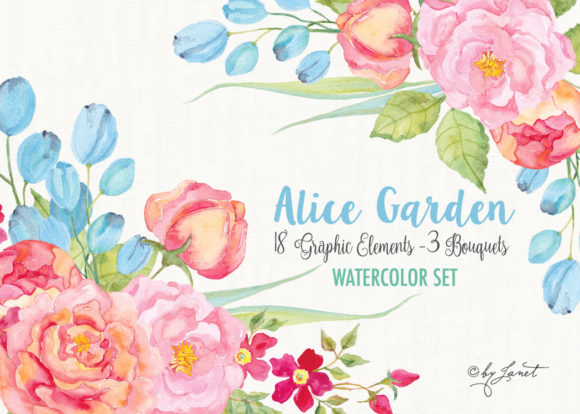
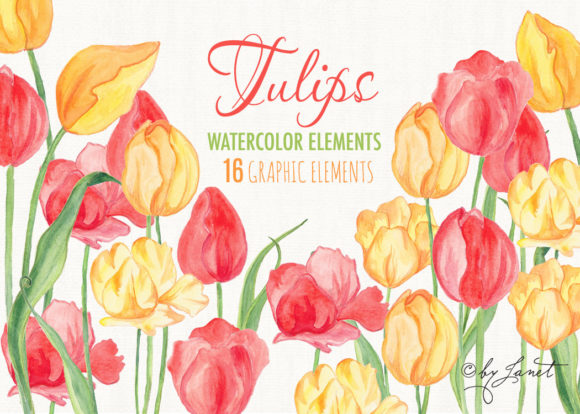
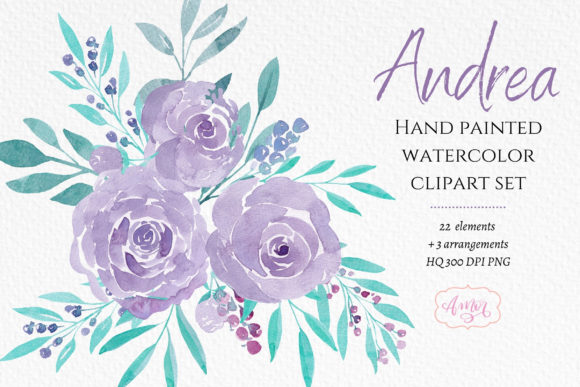
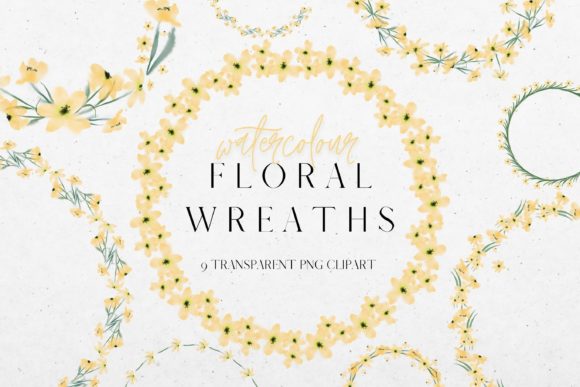
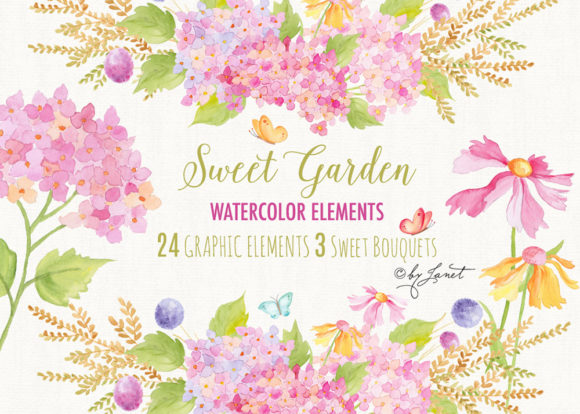
The Sweet Garden Collection is a digital set of 27 high-resolution watercolor clipart elements designed to provide artists and creators with ready-made, beautifully illustrated botanical graphics. This collection includes 24 individual floral elements and 3 complete bouquets, each saved as a PNG file with a transparent background at 300 DPI quality. At its core, it’s a toolbox of visual components meant to be imported into other software, saving you the time and skill required to paint these illustrations from scratch.
Why a Clipart Collection Matters to Different Creators
Your interest in a set like the Sweet Garden Collection likely depends heavily on what you do, why you create, and the tools you already use. A marketing professional looking to quickly refresh a blog’s imagery has different priorities than a hobbyist crafting a wedding invitation for a friend. The value isn’t just in the images themselves, but in what they enable you to do—or avoid doing—within your specific creative process.
For some, the primary benefit is speed and efficiency. Assembling a complex floral design by hand, even digitally, can be a significant time investment. Having pre-made, cohesive elements you can arrange and layer instantly accelerates project timelines. For others, the appeal is accessibility and skill bridging. You might adore the soft, romantic look of watercolor but lack the painting technique or the proper software to create it yourself. This collection acts as a bridge, allowing you to incorporate a professional artistic style into your work regardless of your background.
Practical Uses Across Experience Levels
How you might use the Sweet Garden Collection shifts noticeably based on your experience and usual workflow.
Beginners and Hobbyists
If you’re new to digital design or creating for personal projects, your evaluation often focuses on ease of use and learning value. The PNG format with transparent backgrounds is a key feature here; it means you can drag and drop these elements into user-friendly programs like Canva, basic photo editors, or even word processors without needing to learn complex layering techniques. Imagine placing a delicate watercolor bouquet over a photo of your wedding venue to create a custom save-the-date card, or adding a scattering of flowers to a journal page you’re digitizing. The collection provides a high-quality result that might feel beyond your current skill, helping you learn through successful application. Your priority is likely simplicity and achieving a beautiful outcome without frustration.
Professionals and Small Business Owners
For freelancers, stationery shop owners, marketers, or publishers, the calculus involves commercial value, reliability, and brand consistency. The 300 DPI resolution ensures the graphics remain crisp when printed on physical products like greeting cards, packaging, or book covers. The set’s cohesion—all elements sharing a unified watercolor style—means you can develop a recognizable visual theme across multiple products or campaigns. A small business owner might use the bouquets for primary product imagery on a website and the individual floral elements as decorative accents on menus, social media posts, and email headers. Here, the collection is judged not just as art, but as a versatile, time-saving asset that supports a commercial workflow and maintains a professional presentation.
Educators and Community Creators
Teachers, workshop leaders, or creators making content for community groups might prioritize flexibility and educational utility. The separate floral elements can be excellent components for teaching basic digital composition or color theory, allowing students to arrange and experiment without starting from a blank canvas. They could also be used to create visually engaging instructional materials, certificates, or event announcements for a gardening club or art society. For this audience, the long-term usefulness comes from the set’s ability to be broken down and repurposed across many different, often non-commercial, contexts.
Evaluating the Collection Against Your Needs
Deciding if the Sweet Garden Collection is right for your current project involves asking a few practical questions about your goals and constraints.
Consider your project medium. Are you working on digital screens only, or do you need physical prints? The high DPI supports both, but it’s especially critical for print. Think about your required customization. While you can arrange, resize, and layer these elements freely, they are finished paintings. If you need to fundamentally alter the color palette or stroke style of every flower, a set of editable vector files might be more appropriate. This collection excels in adding ready-made artistry.
Reflect on your software environment. These PNG files are universally compatible, which is a major advantage if you or your clients use a variety of programs. However, if your entire workflow is built within a specific vector-based application like Adobe Illustrator, you might miss the ability to edit paths directly. For most users in photo editing, presentation, or basic design software, the format is ideal.
Prioritizing Quality, Cost, and Creative Freedom
A professional graphic designer evaluating the set will instinctively check the technical quality: the cleanliness of the transparent backgrounds, the consistency of the brushstroke detail across all 27 elements, and whether the color gradients are smooth. This ensures reliable results in demanding client work. An entrepreneur might weigh the cost against the hours it would take to hire an illustrator or create similar assets themselves, viewing it as a fixed-cost investment.
A consumer or hobbyist, on the other hand, might place more weight on creative freedom and inspiration. Does the style of the watercolor flowers resonate personally? Does looking at the bouquets spark ideas for how to use them? For personal projects, emotional connection to the art is a valid and important criterion alongside practical function.
Integrating the Elements into Real-World Projects
To move from abstract evaluation to concrete application, here are a few scenarios showing how the different elements can be employed.
A blogger could use the individual floral elements as recurring visual motifs in a series of posts about garden photography, creating a branded header template. An event planner might layer one of the bouquets over a textured background to create a soft, elegant wedding website banner. A freelancer offering digital portrait photography could add scattered flowers around the subject in promotional materials to suggest a romantic, painterly editing style. Each uses the same assets but derives different benefits: content branding, thematic atmosphere, and service marketing.
The three complete bouquets serve as anchor pieces, perfect for focal points on card fronts or poster designs. The 24 separate elements—single blooms, leaves, sprigs—are the building blocks for creating your own arrangements, framing text, or filling empty spaces with subtle decoration. This split between composed pieces and components is what gives the Sweet Garden Collection its range, catering to both those who want a quick, beautiful solution and those who wish to assemble something uniquely their own.
Ultimately, the usefulness of the Sweet Garden Collection is defined by the gap it fills for you. It might fill a skill gap, a time gap, or a resource gap. By understanding your own primary intent—whether it’s to save hours, achieve a specific aesthetic, enable a commercial venture, or simply enjoy a beautiful creative process—you can best assess how this set of 27 watercolor elements fits into your creative toolkit.